
Assessing and Measuring Preparedness

The Diva got a note from a reader, Terry Hastings, and a citation to a recent article he co-authored. She welcomes the chance to share the citation.

Terry wrote “I am a big fan of your blog and thought your readers may be interested in an article recently published by the Domestic Preparedness Journal. It is based on research my project team conducted as part of the EMI Emergency Management Executive Academy.” See: The Ongoing Quest to Assess & Measure Preparedness. 

New (2023) location: https://www.domesticpreparedness.com/articles/the-ongoing-quest-to-assess-measure-preparedness

An excerpt follows:

Despite the advent of the national preparedness system and associated assessment efforts, the emergency management community is still challenged to measure and articulate local, state, and national preparedness. One of the biggest challenges to measuring preparedness stems from the fact that preparedness means different things to different people. Additionally, how communities and organizations prepare greatly depends on what they are preparing for. Following is an examination of the ongoing quest to assess and measure preparedness with the goal of identifying good practices, ideas, and recommendations for the Federal Emergency Management Agency (FEMA) and other whole community stakeholders – including public sector, private sector, and nonprofit organizations – to consider.
Prepare for Quakes in CA

Earthquake Experts Urge Californians to Prepare for Future Disasters.

In the wake of a series of small Southern California seismic events that prompted a state agency to issue a major earthquake alert, a panel of disaster management leaders urged residents to insure their property and take other steps to get prepared.

The appeal was made by representatives of the American Red Cross, the Los Angeles Emergency Management Department, the California Institute of Technology and the California Earthquake Authority (CEA) – the state-sanctioned not-for-profit insurer – at a November 17 earthquake preparedness forum organized by New America Media.

Southern Californians should prepare for an earthquake comparable to the magnitude 6.7 Northridge temblor in 1994, the last major seismic disaster in the region, according to panelists.

“States at Risk” – rankings for preparedness

States At Risk: America’s Preparedness Report Card. Special Report Prepared by Climate Central and ICF International.

Update: Florida is especially vulnerable and ill-prepared. See this article in Emergency Management magazine: Florida Flood Preparations Slammed in National Report. “A study, called States at Risk, says Florida lacks a long-term plan for dealing with rising sea levels, despite being the nation’s most vulnerable state as oceans inch higher.”


Exemplary Corporate Disaster Preparedness — Waffle House

The article is titled How FEMA Uses Waffle House To Measure Disasters, and you may already have heard that Craig Fugate, FEMA Administration, has devised an index that includes whether or not the Waffle House restaurants are open. But I think the more important point of the story is the exemplary corporate disaster preparedness steps taken by Waffle House — the degree to which the corporate headquarters of Waffle House has taken steps to be prepared for disasters and to ensure the continuity of their operations. Here are some of the details from the article:

Because Waffle Houses restaurants are in areas prone to hurricanes and tornadoes, the company has made it part of their business plan to be prepared, said Pat Warner, the vice president of culture at Waffle House.

“We all have, what I call, ‘day jobs’ and then when the crisis comes, we all kind of stop,” said Warner, who’s also part of the company’s disaster management team. For example, the man who handles restaurant operations also monitors the weather during hurricane season. The company starts tracking storms when they’re still a tropical depression, Warner said.

Every employee also has a copy of the company’s hurricane playbook, which has instructions on how to respond during a crisis. If a storm’s on its way, Warner said the company will rent generators and start sending teams to the area.

Waffle House even has an emergency menu, pared down for quick production and efficiency.

And you have to admit, the free publicity and great community relations are outcomes Waffle House must appreciate.

National Preparedness Report, 2014.

National Preparedness Report, issued March 2014. This 79 page report has been available for several months, but somehow I missed it. Recovery is covered in pages 63-73.

It contains a lot of interesting information and I especially like the format and presentation.  The authors state that they placed a “renewed emphasis on approachable language, clear visuals, and concise narratives….” and I have to commend them.

Thanks to Bill Cumming for providing the citation.

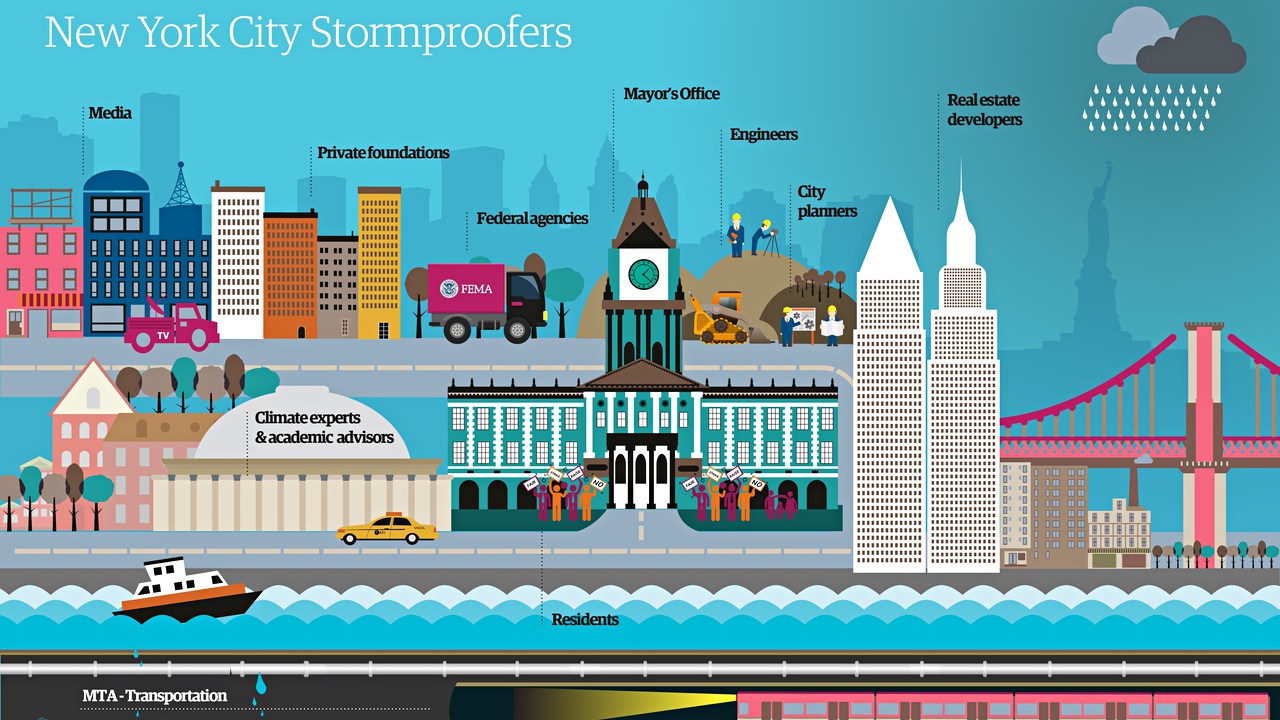
“Stormproofers” in NYC

From the Guardian (UK) an article that is part of a proposed series on disaster preparedness in NYC.  See:  Is New York City ready for future natural disasters? Join our investigation. The lead in states:

Welcome to our new series, where a NYC resident makes sense of the network protecting her from the next Sandy-sized storm … by interviewing the people preparing for it

I find the format of this article rather confusing, but I do like the graphic of the various participants – called “stormproofers” – in the preparedness process.

Stormproofing the City graphic

21 States Do Not Meet Emergency Preparedness Standards for Kids

This past weekend, the Washington Post was full of sad stories of children who dies in unregulated day care facilities here in VA.

Today USAToday reports this article: Report: 21 states don’t meet emergency prep standards for kids. The lead in states:

Twenty-one states and the District of Columbia do not meet emergency planning standards for schools and child care providers, according to a new report from Save the Children. However, for the first time this year, more than half of states — 29 — reach the non-governmental disaster relief organization’s standards in its laws and regulations.

In an accompanying poll, Save the Children found that 69% of parents mistakenly believe their protections are in place.

Here is the direct URL to the Save the Children report. Note the site requires a sign in to get at the 12 page report.

Update: One reader found an error in the report – see comment. If you find anything that is questionable or wrong, please contact the sponsoring agency so that they can correct the data in their next report.